

Tsars casino Plinko
Introduction
I look at Plinko a little differently from the way it is often presented on casino pages. On the surface, it seems almost too simple: you choose a stake, set a risk level, drop a ball, and watch it bounce through a field of pegs until it lands in a multiplier slot. That simplicity is exactly why Tsars casino Plinko catches attention so quickly. A new player understands the interface in seconds, yet the actual session experience can vary sharply depending on settings, pace, and expectations.
For Canadian players in particular, Plinko stands out because it does not feel like a classic slot, a table game, or a live casino title. It sits somewhere in between arcade logic and gambling mathematics. There are no reels, no card decisions, no dealer, and no elaborate Tsars Casino bonus before making a deposit map to learn. Instead, there is a stripped-down system built around probability distribution, variance, and immediate visual feedback.
That is also where many players misread it. Plinko looks transparent because you can see the ball travel. But visible movement does not mean the result is easier to predict in practical terms. In fact, one of the most important things to understand before launching Tsars casino Plinko is that its clean design can hide a very sharp swing profile, especially at elevated risk settings. What appears calm on screen can produce a surprisingly tense session.
In this review, I will break down what Plinko really offers, how the mechanics work in practice, why the rhythm of play matters, where the main strengths and weak points are, and what kind of player is most likely to enjoy it.
What Plinko is and why it draws so much attention
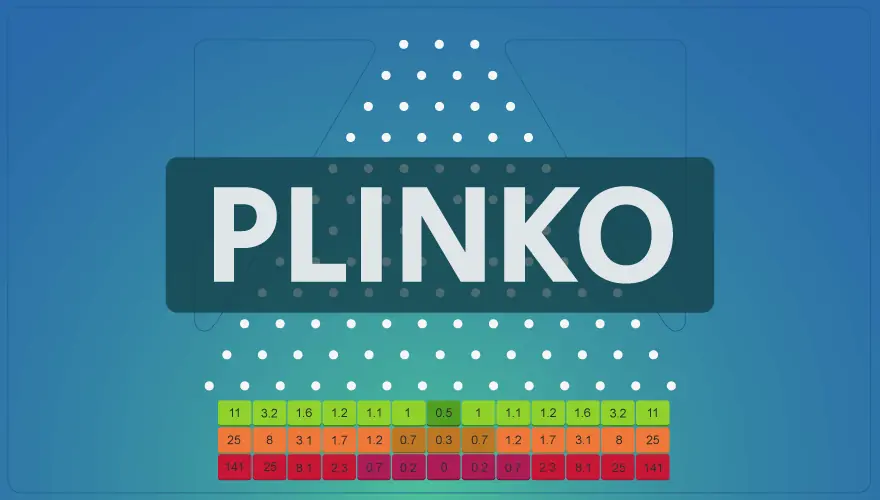
Plinko is a chance-based casino game built around a falling ball and a board filled with pins. After the drop, the ball hits pegs on the way down and changes direction repeatedly before landing in one of several payout zones. Each slot at the bottom carries a multiplier. Low multipliers tend to appear more often, while the highest values usually sit at the edges and appear far less frequently.
The appeal is immediate. Unlike many casino games that ask the player to learn paylines, card rules, side bets, or feature triggers, Plinko explains itself visually. You do not need a long paytable session to understand the core loop. That accessibility is one of the main reasons the format became so visible across modern gaming platforms.
But there is a second reason for its traction, and it matters more. Plinko compresses suspense into a very short cycle. Every drop has a beginning, a visible path, and a result within moments. This creates a rhythm that can feel lighter than a slot spin and more dynamic than many fixed-outcome instant games.
I would add one practical observation here: Plinko often attracts two very different audiences at once. The first group likes it because it feels easy and low-friction. The second likes it because they know that beneath the simple presentation, the distribution of outcomes can be aggressive. That overlap is rare. Most games are either beginner-friendly or variance-driven in perception. Plinko manages to look welcoming while still producing highly uneven sessions.
How the core mechanics work on the board
At the center of Tsars casino Plinko is a probability model displayed as a physical path. The ball starts at the top of the board and bounces left or right as it touches pegs. In visual terms, it looks almost like a random walk. In mathematical terms, the board is structured so that central landing zones are typically reached more often than extreme edge positions.
This is why the biggest multipliers are usually placed on the far ends. They are harder to hit because the path required to reach them is statistically less common. The middle pockets tend to carry lower multipliers because the ball naturally clusters there more often over time.
Most Plinko versions also let the player adjust the number of rows. More rows generally mean a longer path and a wider range of possible landing positions. That can affect the shape of the payout map and how dramatic the distribution feels. A short board may deliver faster, more compressed outcomes. A taller one can create a stronger sense of anticipation and wider result separation.
Another major setting is the risk level. This is not just a cosmetic label. It changes the payout structure in a meaningful way. Lower-risk modes usually flatten the multiplier spread. That means more modest returns, fewer severe misses, and fewer extreme hits. Higher-risk modes do the opposite: they push more value into rare edge outcomes and leave a larger share of the board returning small results or losses relative to the stake.
| Element | What it changes | Why it matters in practice |
|---|---|---|
| Stake size | The amount risked per drop | Directly affects bankroll pressure during fast sessions |
| Risk level | The spread between common and rare multipliers | Determines whether the session feels steadier or more volatile |
| Rows | The length and complexity of the ball path | Can alter pacing, board layout, and outcome distribution |
| Auto-play or repeated drops | The speed of consecutive rounds | Can accelerate losses or smooth emotional reactions to results |
The key point is simple: Plinko is not just “drop and hope.” The player does make choices, but those choices are structural, not strategic in the traditional sense. You are shaping the payout profile of the session, not controlling the path of any individual ball.
Why the pace of Plinko feels different during a real session
This is where the game becomes more interesting than its layout suggests. The tempo of Plinko is one of its defining traits. Each round resolves quickly, but not instantly. There is a brief visual journey between stake placement and result. That short delay matters. It creates suspense without slowing the game down too much.
Compared with a slot, the rhythm is cleaner. There are no long reel animations, no fake near-feature theatrics, and no layered sound design trying to convince the player that every small return is a major event. Plinko is more direct. The ball falls, the route unfolds, the multiplier lands. That clarity is a strength. Those comparing loyalty perks can weigh this section against best no deposit codes for Tsars Casino players.
At the same time, the pace can become deceptively intense. Because each round is easy to understand and fast to repeat, players may go through a large number of drops in a short period. This changes how the bankroll behaves. A low individual stake can still produce a meaningful spend rate if the player runs repeated rounds without noticing how quickly volume builds.
One of the more memorable things about Plinko is that tension often comes from silence rather than noise. In many sessions, the strongest moment is not a dramatic animation but the split second when the ball drifts toward an edge multiplier and then cuts back toward the center. That tiny change in direction can feel more frustrating or exciting than a standard slot spin because the path is visible. The player sees the possibility disappear in real time.
Risk levels, probabilities, and who should take them seriously
If a player wants to understand Tsars casino Plinko properly, this is the section that matters most. The game is built on randomness, but not on equal randomness. Outcomes are distributed unevenly across the board. Most rounds will not land on the highest multiplier zones. In fact, the entire model depends on rare events carrying outsized value while common events keep the overall structure grounded.
That means the risk setting is not a casual preference. It is the central decision shaping the session. A lower-risk mode usually appeals to players who want a smoother curve and are comfortable with limited upside. A high-risk mode is for players who accept that many drops may return little or nothing meaningful while a small number of outcomes carry the session.
Here is the practical translation:
- Low risk tends to produce more stable movement, but the ceiling is lower and the game can feel repetitive if the player is chasing standout moments.
- Medium risk often provides the best balance for testing the format because it shows the logic of the board without pushing variance too hard.
- High risk can create dramatic spikes, but also longer dry stretches that feel harsher than many new players expect from such a simple-looking title.
Another important point: seeing the ball bounce does not give the player actionable predictive power. This is one of the common psychological traps of Plinko. Because the route is visible, some players start feeling that edge outcomes are “close,” “due,” or somehow readable. They are not. The path is part of the presentation, not a tool for forecasting future drops.
So when I assess Plinko as a gambling product, I see it as a game that can be easier to grasp than a slot, but not necessarily easier to manage. The settings are simple, yet the consequences of those settings are significant.
What the player should know about session flow and likely outcomes
Plinko works best when the player understands that short-term experience can be very uneven. A handful of rounds tells you almost nothing about the true behavior of the board. You may hit a strong multiplier early and assume the game is generous, or miss repeatedly and assume it is cold. Neither conclusion means much in isolation.
Over a longer sequence, the central logic becomes clearer: smaller multipliers appear more often, edge hits remain uncommon, and the chosen risk profile determines how sharp the contrast feels between ordinary and standout results. This is why bankroll planning matters even in a game that looks almost casual.
I usually suggest paying attention to three practical variables before judging any Plinko session:
- How many drops you expect to make. A fast game can consume budget quickly even with modest stakes.
- Whether you are testing the format or chasing high multipliers. Those are different goals and should lead to different settings.
- How you react to repeated low-value results. Some players stay detached; others escalate too quickly after a dry run.
This last point is especially relevant. Plinko can produce a distinct emotional pattern: many ordinary outcomes, brief flashes of possibility, and occasional spikes. For some players, that rhythm is exciting. For others, it can feel thin if the session does not deliver a notable hit. The game does not hide what it is doing, but the emotional effect can still be stronger than expected.
How Plinko differs from slots and other casino formats
The easiest comparison is with classic online slots, because that is where many players come from. The biggest difference is that Plinko removes layered systems. There are no reels, no paylines, no wild substitutions, no free spin sequence, and no bonus round tree to memorize. The entire experience is concentrated into one visible event and one multiplier result.
That creates a very different relationship with randomness. In a slot, the player often interacts with symbols and feature triggers that suggest progression. In Plinko, there is no illusion of narrative buildup. Each drop stands on its own. That makes the game feel cleaner, but also more exposed. There is less decorative structure between the player and the mathematics.
Compared with roulette, Plinko is less about selecting an outcome zone and more about accepting a shaped distribution. Compared with crash games, it is less about timing and more about passive resolution. Compared with table games, it offers no strategic layer in the conventional sense. You are configuring a probability environment, not outplaying a system.
| Format | Main player interaction | How Plinko differs |
|---|---|---|
| Classic slots | Spin-based symbol combinations and features | Plinko is more stripped down and visually transparent |
| Roulette | Bet selection across a wheel layout | Plinko uses a falling-path model instead of direct number coverage |
| Crash games | Cash-out timing before the round ends | Plinko removes timing decisions and resolves automatically |
| Blackjack | Decision-making against fixed rules | Plinko has no tactical play after the drop starts |
In practical terms, this means Plinko suits players who want immediacy without complicated rules. It is less suitable for those who enjoy building decisions throughout a round.
Practical strengths and limitations of Tsars casino Plinko
When I evaluate the format honestly, I see several clear strengths. First, the learning curve is minimal. A player can understand the board quickly and start testing different settings without digging through an oversized help section. Second, the visual logic is clean. The route of the ball gives a satisfying sense of motion and suspense without unnecessary interface clutter. Third, the game is flexible in tone. By changing rows and risk level, the player can shift the session from relatively calm to highly swing-driven.
There are, however, real limitations. Plinko has far less thematic depth than a modern slot. If a player enjoys story, feature layering, character design, or evolving bonus structures, this format may feel too bare after the novelty fades. It can also become repetitive because the core loop does not change much. The board remains the board. The tension comes from distribution, not from expanding gameplay variety.
The most debated point is probably the contrast between visual simplicity and actual bankroll behavior. Because the interface looks light and almost playful, some players underestimate how fast repeated rounds can add up, especially in high-risk mode. This is not a flaw in the mathematics, but it is a practical issue in user experience.
I would summarize the strengths and weak points like this: To understand the wagering rules behind each offer, open Tsars Casino Aviator crash game for new players next.
- Strong side: instant clarity, fast rounds, visible outcome path, adjustable session profile.
- Weak side: limited depth, potential repetition, and a tendency to feel harsher than expected when variance is set high.
What to check before launching a Plinko session
Before starting Tsars casino Plinko, I would focus less on excitement and more on fit. This game is not automatically right for every player just because it is easy to understand. The smarter approach is to match the format to your preferences and bankroll style.
Here are the main things worth checking:
Understand the risk setting before increasing the stake. Many players do the reverse. They raise the amount first and only later notice that the board is configured for a much sharper distribution.
Use a short test run to read the pace. Even if a demo mode or low-stake option is available, the point is not to “solve” the board. The point is to see whether the rhythm suits you.
Decide whether you want consistency or occasional spikes. Plinko can cater to both, but not at the same time. Your settings should reflect your actual goal.
Watch round speed. Auto-play and rapid repetition can flatten your emotional response to losses while increasing total exposure. This is one of the easiest ways to lose track of session cost.
Do not confuse visual closeness with statistical closeness. A ball that almost reaches a high multiplier is still a miss. In Plinko, near-edge paths can distort perception more than near-misses in slots because you watch them unfold live.
That last point is one of the most important observations in this entire review. Plinko is one of the few casino formats where the player can literally see disappointment happen step by step. For some, that is what makes it compelling. For others, it makes losing streaks feel more personal than they really are.
Who Plinko suits best and who may prefer another format
In my view, Plinko works best for players who like direct, fast, visually readable gambling without heavy thematic packaging. It also suits those who appreciate adjusting the shape of risk rather than simply pressing spin and waiting for features to appear. If you enjoy observing probability play out in a compact form, there is a lot to like here.
It may be less suitable for players who want strategic influence during each round, or for those who need strong narrative variety to stay engaged. If you prefer blackjack-style decision points, roulette coverage logic, or slot bonus progression, Plinko may feel too narrow. Likewise, if repeated low-value outcomes frustrate you quickly, high-risk Plinko can become tiring rather than entertaining.
So the ideal player profile is not “everyone.” It is someone who values speed, clarity, and adjustable variance, and who understands that the game’s simplicity does not make it gentle.
Final verdict
Tsars casino Plinko offers a very specific kind of gambling experience: fast, visual, stripped back, and heavily shaped by distribution settings. Its biggest strength is clarity. You always know what is happening, and the board communicates the basic idea instantly. Its second strength is flexibility. By changing rows and risk level, the same format can feel relatively measured or sharply swing-driven.
That said, Plinko deserves more caution than its minimalist interface suggests. The game can move quickly, the emotional pull of visible near-misses is real, and high-risk settings can produce rough stretches that surprise inexperienced players. It is not complicated, but it is not harmlessly simple either.
If you want a casino game that cuts away extra layers and puts probability front and center, Plinko is absolutely worth trying. If you want depth, evolving features, or tactical decision-making inside each round, another format will likely suit you better. That is the honest divide.
My overall view is straightforward: Plinko is at its best when the player approaches it with clear expectations. It is not a slot replacement for everyone, and it is not just a casual drop-and-watch diversion. What it really offers is concentrated randomness in a clean visual form. For the right player, that is exactly the appeal. For the wrong one, the novelty can fade quickly and the swings can feel sharper than expected.
FAQ
How does Tsars Plinko work when a ball is dropped?
A ball drops from the top grid and bounces through the pegs into a numbered chute. Each chute corresponds to a multiplier that applies to the stake. The result is calculated instantly when the ball lands.
What should be checked before starting a Plinko round in real-money play?
Confirm the game is in real-money mode and the stake amount is set correctly. Check the displayed table limits and any active bonus balance rules before dropping the ball.
How do multipliers in Plinko affect the payout on Tsars?
The chute where the ball lands determines the multiplier level applied to the stake. Higher multipliers typically come from specific outcomes, so results vary by round.
Can Plinko be played on the mobile casino app or mobile browser without losing features?
Plinko is available for mobile play using the responsive game view. Mobile casino app access is designed for quick launching, but very old devices may experience display delays.
Why might a promo balance or bonus balance not be used on Plinko even though a bonus is active?
Some promotions apply only to specific games or require wagering conditions to be met first. Check the bonus balance rules and whether Plinko is listed as eligible for the current offer.